 Help
Help
Written by Mariia Roza
Mariia Roza is a weight loss and fitness writer at Unimeal. She is an expert in nutrition, wellness, longevity, and sports.

Fact checked by Stephanie Beaudette, M.Ed., RDN
Stephanie Beaudette is a dietitian and nutritionist accredited by the Commission of Dietetic Registration. She is a BS in Dietetics and an ME in Nutrition.
Fasting is the oldest diet in the world. It’s something we’ve been doing for thousands of years. Intermittent fasting is just a rebranding of something that humanity has known for centuries.
In the modern era, intermittent fasting started to gain massive popularity after 2016, when the Japanese cell biologist Yoshinori Ohsumiwon a Nobel prize for his studies of autophagy1Ohsumi Y. (2012). Yoshinori Ohsumi: autophagy from beginning to end. Interview by Caitlin Sedwick. The Journal of cell biology, 197(2), 164–165. DOI:10.1083/jcb.1972pi. Followed by the scientific statement2St-Onge M-P., Ard J., Baskin M. L., et al. (30 Jan 2017). Meal Timing and Frequency: Implications for Cardiovascular Disease Prevention: A Scientific Statement From the American Heart Association. Circulation. DOI:10.1161/CIR.0000000000000476 by the American Heart Association about the possible effect of intermittent fasting on heart health and weight loss, intermittent fasting became a buzzword and a topic of interest for scholars, practicing nutritionists, and fitness coaches.
Eat tasty food and lose weight with Unimeal app!
Take a Quiz – Get personal meal plan – Achieve your weight goals!
Start Quiz
Scientists conduct constant3De Cabo R., Mattson M. P. (2019, December). Effects of Intermittent Fasting on Health, Aging, and Disease. The New England Journal of Medicine. DOI:10.1056/NEJMra1905136 research on the timing schedules of fasting and their impact on health. This research is mainly made on animals and not on human beings. It does matter, and it means that in most cases, we can talk about “theoretical benefits” and not 100% improvement in some health conditions. So, here are the directions in which intermittent fasting theoretically can be beneficial for your health:
What is 14/10 intermittent fasting?
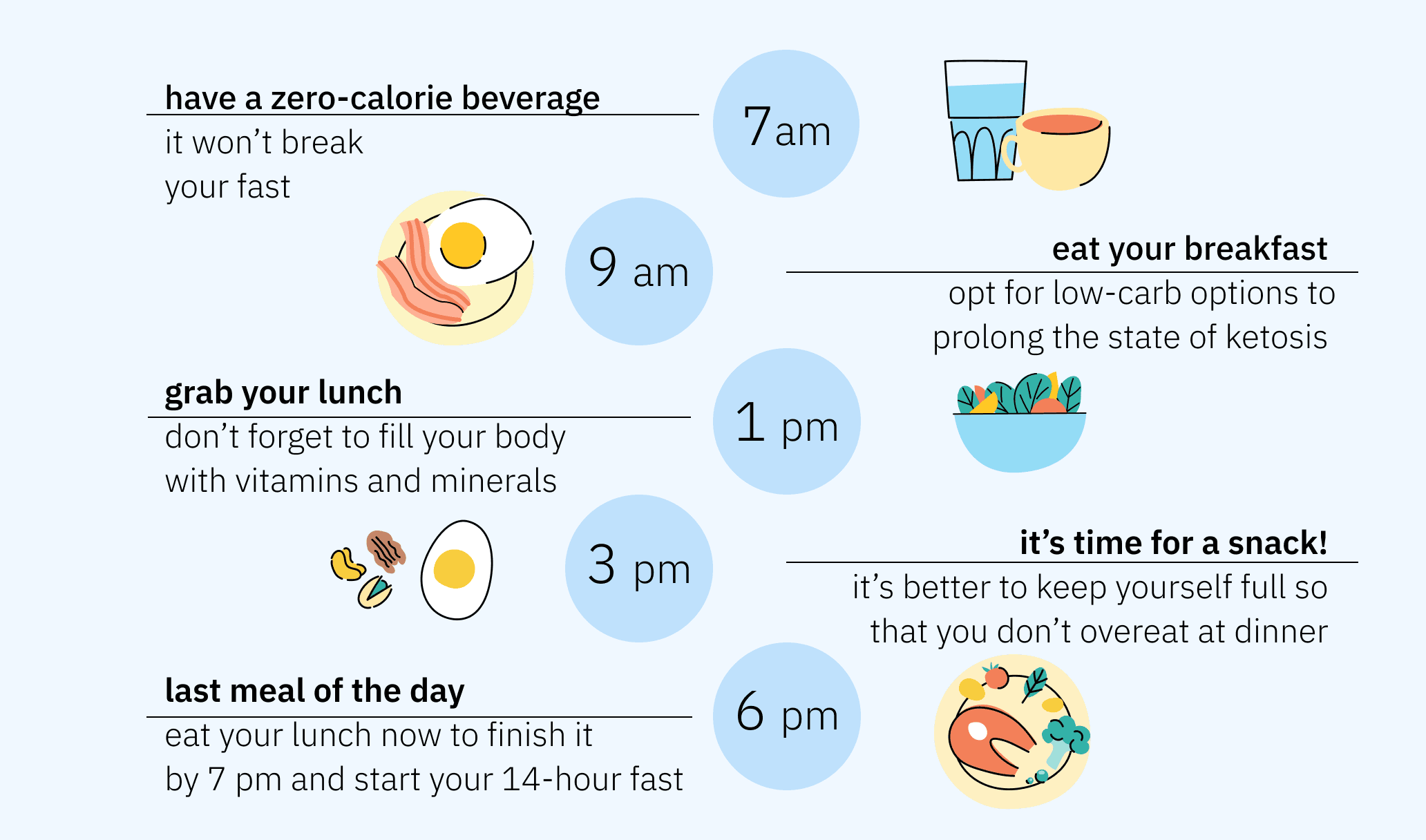
14:10 IF protocol means that you can eat for ten hours of the day, and you should fast (eat nothing and only drink zero-calorie beverages like water, tea, or coffee) for another 14 hours. This scheme is easier to follow than other IF protocols. If you’re the lucky one who sleeps eight hours a night, you will have to fast only for six additional hours during the day.
If you’re interested in other more popular IF methods, like OMAD or alternative day fasting, 14:10 is a great starting point.
Another great benefit of this particular scheme is that you will face fewer side effects, like extreme hunger, which means you have fewer chances to overeat when your fasting period is over.
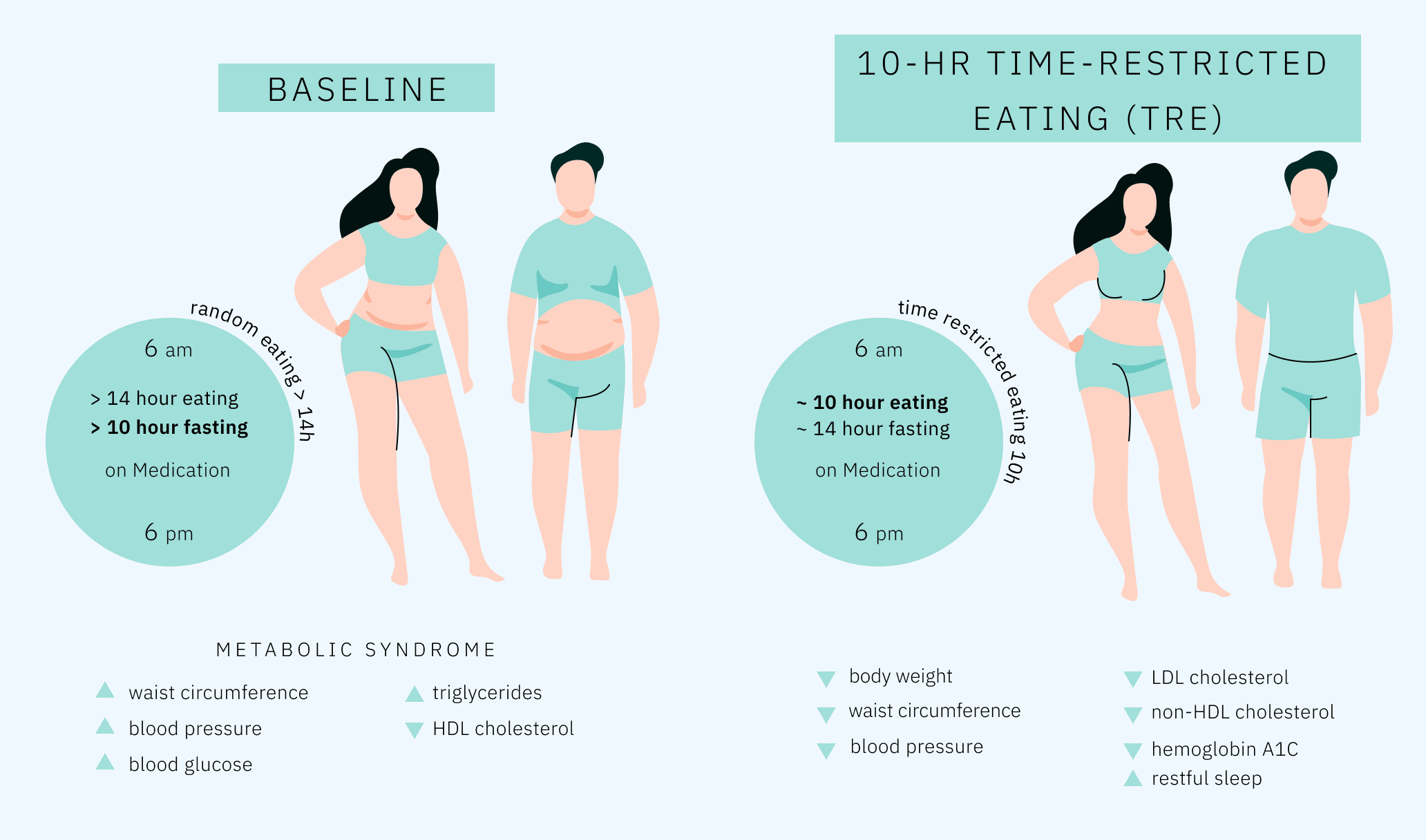
Earlier on, nutritionists mainly talked about the health benefits of prolonged fasting (24 to 72 hours), alternate-day fasting, and the most popular IF scheme, which is 16:8. However, recently, a study was published in Cell Metabolism14Wilkinson M. J., Manoogian E. N. C., Zadourian A., et al. (2020, January). Ten-Hour Time-Restricted Eating Reduces Weight, Blood Pressure, and Atherogenic Lipids in Patients with Metabolic Syndrome. Cell Metabolism. DOI:10.1016/j.cmet.2019.11.004 about the effect of shorter fasting periods. The paper stated that 10 to 14 hours of fasting can benefit your weight and health as well as prolonged fasting periods.
To answer this question substantially, we will have to explain how people think IF works and how it really works.
IF followers who state that you can eat as much as you want and whatever you like while following intermittent fasting protocols explain their position by two main phenomena of IF.
First of all, your blood sugar and insulin levels naturally decline when you fast. And as insulin is often observed as the “fat-storing hormone15Kolb H., Kramer W., Kempf K., et al. (2018, December). Insulin Translates Unfavourable Lifestyle into Obesity. BMC Medicine. DOI:10.1186/s12916-018-1225-1,” its decline is perceived as something that boosts the weight loss process.
Insulin does participate in storing fat. However, if you don’t have some significant hormonal problems, it does so only if you eat too many calories and your body cannot store the excess as glycogen anymore. In this case, insulin helps store this excess energy as fat.
The second reason why some people believe that intermittent fasting is better than other methods to manage weight is that fasting brings you into the state of ketosis. However, this concerns only the prolonged fasting periods.
The thing is, when you start your fast, first of all, your body will consume glycogen, the store of glucose. This usually takes about 24 hours. After that, your body starts to use fat stores for energy.
A randomized controlled study16Lowe D. A., Wu N., Rohdin-Bibby L., et al. (2020, November). Effects of Time-Restricted Eating on Weight Loss and Other Metabolic Parameters in Women and Men With Overweight and Obesity: The TREAT Randomized Clinical Trial. JAMA Internal Medicine. DOI:10.1001/jamainternmed.2020.4153 on more than 100 adults has demonstrated that time-restricted eating is not more effective in weight loss than eating without time restrictions. Lower insulin levels or changed fat metabolism alone don’t make you magically lose weight.
Every case of weight loss on intermittent fasting has less to do with insulin levels and fat metabolism and more with calorie restriction during the fasting periods. A systematic review17Headland M., Clifton P. M., Carter S., et al. (2016, June). Weight-Loss Outcomes: A Systematic Review and Meta-Analysis of Intermittent Energy Restriction Trials Lasting a Minimum of 6 Months. Nutrients. DOI:10.3390/nu8060354 with almost 1000 participants has demonstrated that people who chose time-restricted eating and people who maintain a calorie deficit lose weight almost at the same rate.
Even a study18Trepanowski J. F., Kroeger C. M., Barnosky A., et al. (2017, July). Effect of Alternate-Day Fasting on Weight Loss, Weight Maintenance, and Cardioprotection Among Metabolically Healthy Obese Adults: A Randomized Clinical Trial. JAMA Internal Medicine. DOI:10.1001/jamainternmed.2017.0936 on alternate-day fasting when the participants were on a 25% calorie deficit showed no significant difference in the weight loss. And this is yet another proof that there’s no metabolic magic in intermittent fasting. It’s just about calorie deficit.
If intermittent fasting fits your schedule, looks like a reliable diet strategy, and helps you eat fewer calories, it might work for you.
Its primary working mechanism that helps you drop off pounds is that it makes you eat fewer calories during your eating window. Intermittent fasting creates “invisible walls” that might help some people eat less.
Shrinking your eating window also makes your square meals more substantial. Now, when you don’t have all your snacks and maybe skip breakfast or dinner, you have your calories divided between fewer meals. This means that your meals can be larger and more calorie-dense.
Our point is if you want to lose weight, but intermittent fasting is not very sustainable for you, there are probably no benefits you will miss if you just follow a standard calorie-restriction diet.
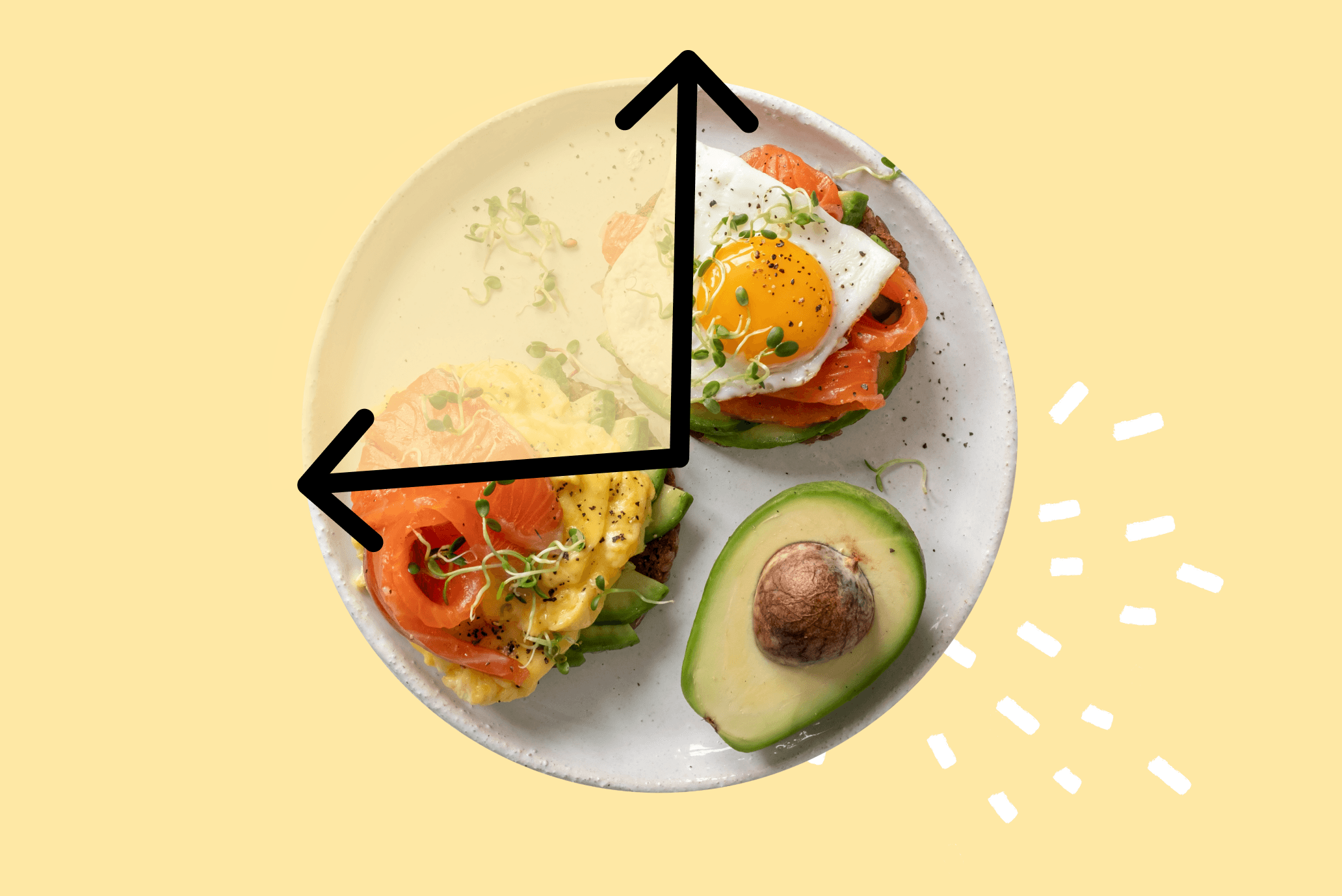
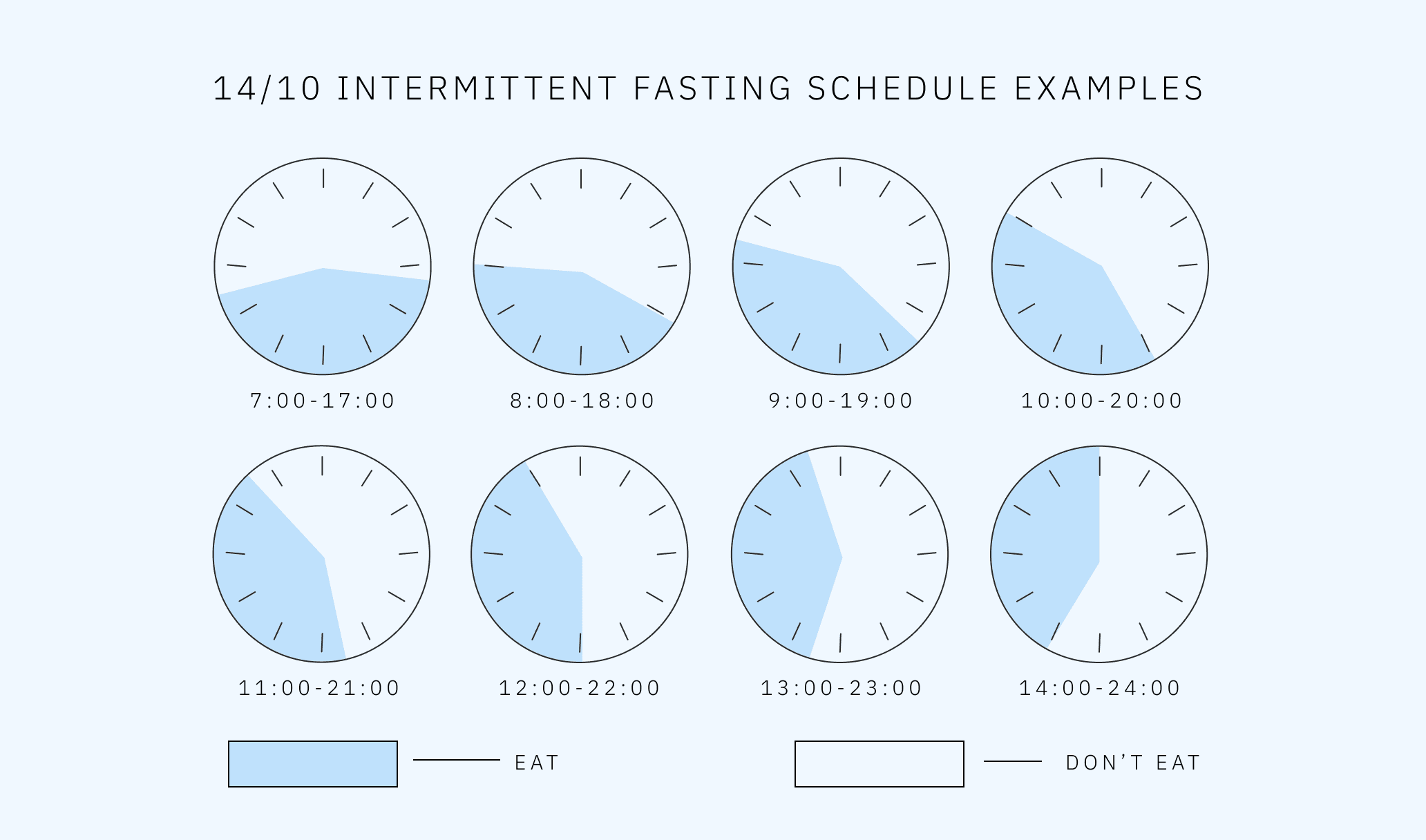
One of the most significant advantages of intermittent fasting is that you can customize it according to your likings and lifestyle. If you’re okay with skipping breakfast but hate going to bed on an empty stomach, it would be unwise to stuff yourself with breakfast at 7:00 and stop eating at 17:00. You’d better try eating from 12:00 to 22:00.
Your comfort and, hence, the sustainability of the 14/10 IF protocol are the most important indicators that should help you choose your timing scheme.
However, suppose you want to maximize the benefits of intermittent fasting for your health19Sutton E. F., Beyl R., Early K. S., et al. (2018, June). Early Time-Restricted Feeding Improves Insulin Sensitivity, Blood Pressure, and Oxidative Stress Even without Weight Loss in Men with Prediabetes. Cell Metabolism. DOI:10.1016/j.cmet.2018.04.010. In that case, you should try eating according to the natural circadian rhythms of the human body, meaning eating during daylight and fasting during the night. Studies show that meal timing can regulate20Wehrens S. M. T., Christou S., Isherwood C., et al. (2017, June). Meal Timing Regulates the Human Circadian System. Current Biology. DOI:10.1016/j.cub.2017.04.059 the human circadian system. It might21Reutrakul S., Van Cauter E. (2014, April). Interactions between Sleep, Circadian Function, and Glucose Metabolism: Implications for Risk and Severity of Diabetes. Annals of the New York Academy of Sciences. DOI:10.1111/nyas.12355 help normalize your circadian rhythms, prevent cardiovascular disease, and lose weight22Boege H. L., Bhatti M. Z., St-Onge M-P. (2021, August). Circadian Rhythms and Meal Timing: Impact on Energy Balance and Body Weight. Current Opinion in Biotechnology. DOI:10.1016/j.copbio.2020.08.009.
The followers of the classic intermittent fasting protocols state that it doesn’t matter what or how much you eat. The only thing that matters is when you eat. However, practice shows that it is not exactly true, and you can still gain weight if you eat too much during your eating hours.
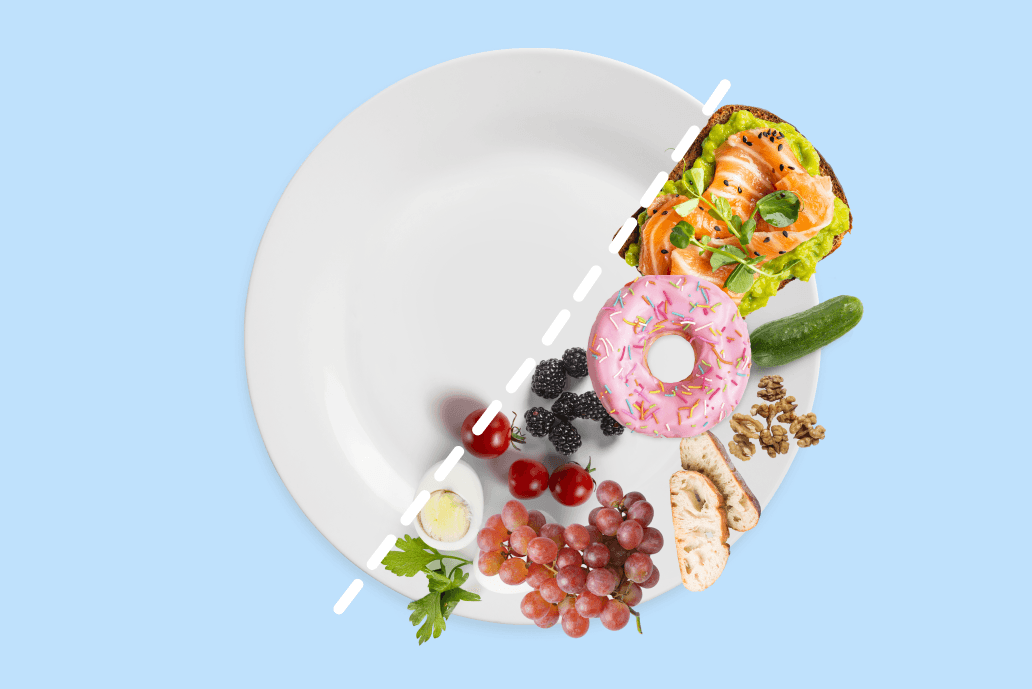
What about the types of food you should choose to get the most from your diet? It goes without saying that it’s better to eat high-quality products:
There is a rising belief that intermittent fasting works best when combined with the ketogenic diet. The principal advocate of this duo-dieting is Dr. Jason Fung. He assures his clients that it is best to eat according to the ketogenic diet principles during your eating window to stimulate ketosis and boost your weight loss during intermittent fasting.
Summing up, there is no unanimous position on what exactly you should be eating during your intermittent fasting. It is best to try various ways of eating and breaking your fast to find out what is more efficient (and, more importantly, more sustainable) for you.
The time needed to lose weight on a particular diet is the hardest question to answer. Every person is unique, and too many variables can affect your weight loss speed. For example, one systematic review26Welton S., Minty R., O’Driscoll T., et al. (2020, February). Intermittent Fasting and Weight Loss. Systematic Review. Canadian Family Physician. PMID:32060194 of 27 trials on intermittent fasting (mostly 5:2 and 16:8 schedules) found that the results can vary a lot. The weight loss in these trials comprised from 0.8% to 13% of baseline weight.
However, nobody can say how much weight you will lose in a week or a month without knowing your gender, weight, height, body fat percentage, metabolic rate, previous history of dieting, genetic predispositions, level of physical activity, and health condition.
Some mistakes can sabotage your weight loss. Here are some possible reasons why you don’t lose weight on intermittent fasting as fast as you want to:
Your every meal is a cheat meal. “I’ve been fasting for 14 hours, so now I deserve something tasty, right?” This approach can make you overeat way too easily.
You snack all day long. You can be overconsuming calories if, instead of having three square meals during your eating window, you snack all day long.
You binge after the fast. You overcompensate your fast during the eating window and eat too much during your fast-breaking meal.
You have too much high-calorie food. In the end, it’s all about calories in - calories out, really. So if you overeat the healthiest salmon, olive oil, and avocado, you can gain weight even when you’re on intermittent fasting.
Article updated: July 12, 2022
Unimeal does not diagnose or suggest treatments. Any description of the diet, training plan or supplement should be discussed with your current physician or nutritionist. This article does not address specific conditions and is simply meant to provide general information on healthcare topics. Following any advice is at your own initiative and does not impose any responsibility on the blog authors for your health and safety.
Sources:
By choosing high-quality sources, we make sure that all articles on the Unimeal blog are reliable and trustworthy. Learn more about our editorial processes.
1.
2.
3.
4.
5.
6.
7.
8.
9.
10.
11.
12.
13.
14.
15.
16.
17.
18.
19.
20.
21.
22.
23.
24.
25.
26.