Your TDEE (Total Daily Energy Expenditure) shows exactly how many calories your body burns each day — from maintaining basic bodily functions to powering your workouts. Understanding this number allows you to eat smarter, maintain energy, and create a sustainable plan for weight loss, weight gain, or maintenance.
Whether you’re exploring the best calorie tracker app, a calorie checker app, or just want a free TDEE calculator, this tool gives you a clear starting point.
To truly understand your TDEE, it’s important to know the difference between these two metrics. BMR is the number of calories your body burns at complete rest. TDEE is your BMR multiplied by your activity factor — the number that shows your real daily energy expenditure.
For example, if your BMR is 1500 kcal and you have a moderate activity level, your TDEE might be around 2000–2200 kcal — the exact amount needed to maintain your current weight.
What TDEE really is
TDEE stands for Total Daily Energy Expenditure — the total number of calories your body burns per day. It includes three main components:
Your BMR (Basal Metabolic Rate)
Your physical activity level
The energy cost of digestion (thermic effect of food)
This number is your best starting point for building a sustainable eating plan that fits your goals and lifestyle. Instead of guessing, you’ll have a science-backed target to work with.
The easiest way to know your daily calorie needs
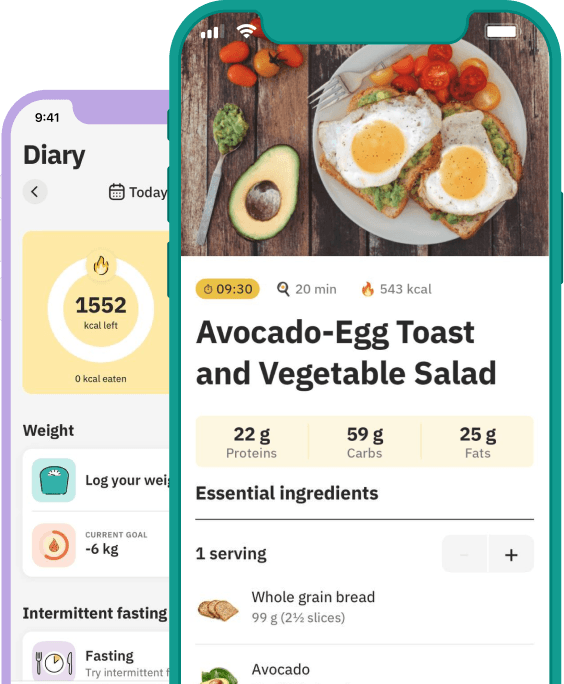
Counting calories is easier than ever with modern apps and online tools. To find out your personalized calorie needs, enter your details below and get your exact number right away.
TDEE Calculator
lb, ft
kg, cm
Current weight (lb)
Height (ft)
Age (years)
Select your gender
Activity level
Your Goal
This tool is for informational purposes and does not qualify as a medical opinion. Consult your doctor before beginning any diet or exercise plan.
However, this is just a basic calculation. Take a short quiz to find out exactly how many calories your body needs each day to reach your weight goals safely and effectively!
Health coach comment
Ievgeniia Dobrynina, Health&Wellness Coach
A TDEE calculator combined with a simple calorie tracker is a powerful tool. When you eat according to your true energy needs, your results are predictable and long-lasting.
TDEE and weight loss
Your weight is influenced by many factors, including total daily energy expenditure. To gain weight, you must consume more than your body uses. To lose weight, you can either eat less or burn more — the most effective approach combines both.
For example, if your TDEE is 2500 kcal (17,500 per week), reducing your intake by 3,500–7,000 kcal weekly (via a calorie and nutrient tracker or more activity) puts you at 1,500–2,000 kcal per day — the safe range for weight loss.
This steady approach is safer, easier to follow, and more sustainable in the long run — whether you use the calorie tracker app or simply follow your TDEE result manually.
Practical tips for steady weight loss based on your TDEE
Plan portions, not restrictions — use a smaller plate and fill half with veggies.
Stay hydrated — water and herbal teas ease digestion and prevent false hunger.
Batch-cook once a week — roast vegetables, grill lean protein, and cook a pot of whole grains for quick assembly meals.
Add gentle movement — a daily walk or a light strength band routine preserves muscle and supports fat loss.
Introduce a 12 : 12 eating window if comfortable — a simple overnight fast can calm late-night cravings without drastic change.
Summary
Take charge of your weight loss journey with our TDEE calculator. Whether you’re looking for a fat loss guide, a weight reduction tool, or the right macros to reach your goals, our calculator gives you accurate, personalized numbers based on your TDEE. Start today and make every meal work toward your success!
Unimeal does not diagnose or suggest treatments. Any description of the diet, training plan or supplement should be discussed with your current physician or nutritionist. This article does not address specific conditions and is simply meant to provide general information on healthcare topics. Following any advice is at your own initiative and does not impose any responsibility on the blog authors for your health and safety.

 Help
Help